

The Importance of Small Businesses in Today’s Economy: Why Local Matters
In a world dominated by multinational corporations and global e-commerce giants, it is easy to overlook the modest storefronts on Main Street or the independent service providers working from home offices. However, small businesses are far more than just “mom-and-pop” shops; they are the lifeblood of the global financial system. The importance of small businesses in today’s economy cannot be overstated, as they serve as the primary drivers of job creation, innovation, and community stability.
According to various Small Business Administrations (SBAs) worldwide, small-to-medium enterprises (SMEs) account for the vast majority of businesses in most countries. They represent the entrepreneurial spirit that pushes society forward, providing a level of agility and personalization that large corporations simply cannot replicate. In this article, we will explore the multifaceted role small businesses play in sustaining economic health and why supporting them is crucial for a prosperous future.
1. A Powerhouse for Job Creation
One of the most significant indicators of the importance of small businesses is their role as a primary employer. While large corporations often make headlines for massive layoffs or hiring freezes, small businesses consistently provide steady employment opportunities for the local workforce.
- Driving Employment Numbers: In the United States, small businesses have accounted for over 60% of net new jobs created since the 1990s.
- Entry-Level Opportunities: They often serve as the first point of entry for young people entering the workforce, providing essential training and experience.
- Diverse Hiring Practices: Small business owners are often more rooted in their communities, leading to more inclusive hiring practices that reflect the local demographic.
By providing jobs to millions, these enterprises ensure that income is distributed throughout various sectors of society, reducing unemployment rates and fostering economic stability at the grassroots level.
2. Stimulating the Local Economy: The Multiplier Effect
When you spend a dollar at a large multinational chain, a significant portion of that money leaves the local community to pay for corporate overhead, global marketing, and shareholder dividends. Conversely, when you spend money at a local small business, a much higher percentage of that revenue stays within the local economy. This phenomenon is known as the “Multiplier Effect.”
Small business owners are more likely to utilize other local services, such as local accountants, printers, and suppliers. Furthermore, because the employees of these businesses live in the same area, they spend their wages at nearby grocery stores and service providers. Studies have shown that for every $100 spent at a local business, roughly $68 stays in the community, compared to only $43 when spent at a large-scale retailer.
3. Fostering Innovation and Healthy Competition
Innovation isn’t just born in high-tech laboratories in Silicon Valley; it happens every day in the garages and small offices of entrepreneurs. The importance of small businesses is evident in their ability to pivot quickly and experiment with new ideas without the bureaucratic red tape that plagues larger organizations.
Small businesses are often the pioneers of niche markets, developing specialized products and services that large corporations might find too risky to pursue. This constant influx of new ideas forces larger companies to innovate as well, keeping the marketplace competitive. Without the pressure applied by agile small businesses, industries would stagnate, leading to higher prices and lower-quality products for consumers.
4. Strengthening Community and Social Identity
Beyond the cold hard numbers of GDP and employment stats, small businesses provide the “soul” of a community. They contribute to the unique identity of a neighborhood or city, making it a more attractive place to live and visit.
- Personalized Service: Small business owners often know their customers by name, offering a level of customer service and accountability that creates a sense of belonging.
- Philanthropy and Support: Local businesses are the most frequent sponsors of youth sports teams, local charities, and community festivals.
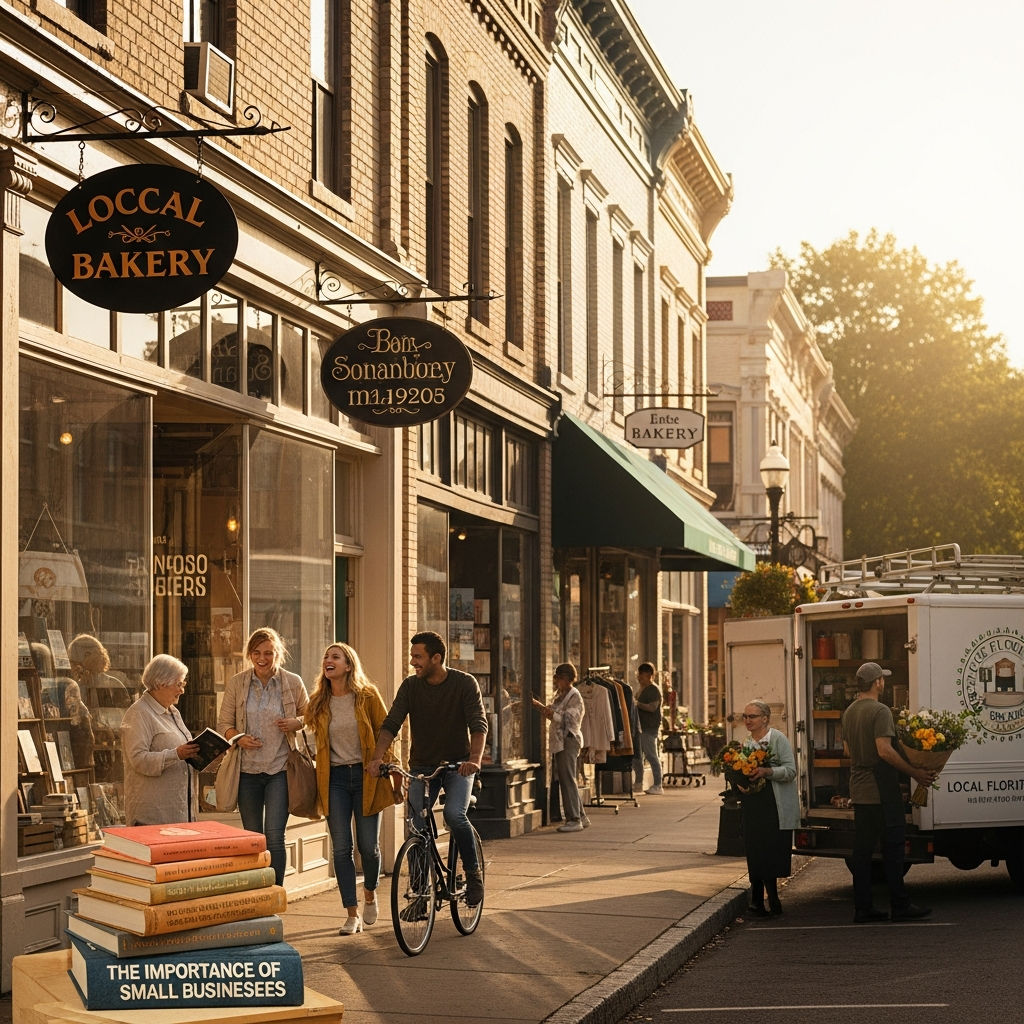
- Preserving Local Culture: Whether it’s a traditional bakery, a local bookstore, or a craft brewery, these businesses preserve and celebrate the cultural heritage of their specific region.
When small businesses thrive, they create a virtuous cycle of community pride and social cohesion, which in turn attracts further investment and talent to the area.
5. Resilience and Economic Diversity
An economy that relies too heavily on a few massive corporations is inherently fragile. If one of those giants fails or relocates, the entire region can be plunged into an economic depression. A diverse ecosystem of small businesses provides a safety net against such volatility.
Because small businesses operate in various sectors—from retail and hospitality to manufacturing and professional services—they create a diversified economic base. During economic downturns, small businesses have historically shown remarkable resilience. Their ability to adapt their business models quickly allows them to survive shifts in consumer behavior that might sink a less flexible corporate giant.
6. The Rise of the “Digital Small Business”
In the modern era, the definition of a small business has expanded. The digital revolution has empowered entrepreneurs to reach global audiences from their living rooms. This shift has amplified the importance of small businesses in today’s economy by lowering the barrier to entry for entrepreneurship.
E-commerce platforms, social media marketing, and remote work tools have allowed specialized small businesses to compete on a global scale. This “democratization of business” means that a craftsman in a small rural town can sell their products to a customer on the other side of the world, bringing outside wealth directly back into their local community.
7. Challenges Facing Small Businesses
Despite their importance, small businesses face significant hurdles in the current economic climate. Rising inflation, labor shortages, and the increasing cost of digital transformation put immense pressure on small margins. Furthermore, access to capital remains a major barrier for many aspiring entrepreneurs, particularly those from marginalized backgrounds.
To ensure the continued health of our economy, it is vital that government policies support small business growth through tax incentives, streamlined regulations, and improved access to low-interest loans. Policy-making that favors “the big guys” at the expense of “the little guys” ultimately hurts the consumer and the long-term stability of the market.
Conclusion: A Collective Responsibility
The importance of small businesses in today’s economy is undeniable. They are the engines of growth, the creators of jobs, and the guardians of community character. However, their survival depends on the conscious choices of consumers and the strategic support of policymakers.
As consumers, we have the power to influence the economic landscape with every purchase we make. Choosing to “shop small” is not just a trend; it is an investment in the prosperity of our neighbors and the resilience of our local communities. By supporting small businesses, we are ensuring a future that is diverse, innovative, and human-centered. In the grand machinery of the global economy, it is the small gears that keep everything running smoothly.